CHAPTER 03 · BUILD
Agents Shipped Inside the Existing Stack
The first system, and the two right behind it, shipped inside the plant's existing systems — no new platform, no ERP migration. Each one is real and running.
THE AGENTS · 3 FOR THIS WORKFLOW
This floor needed three. The number isn't a package — it's however many distinct jobs the work splits into. Each agent is a separate identity with its own scoped tools and permissions.
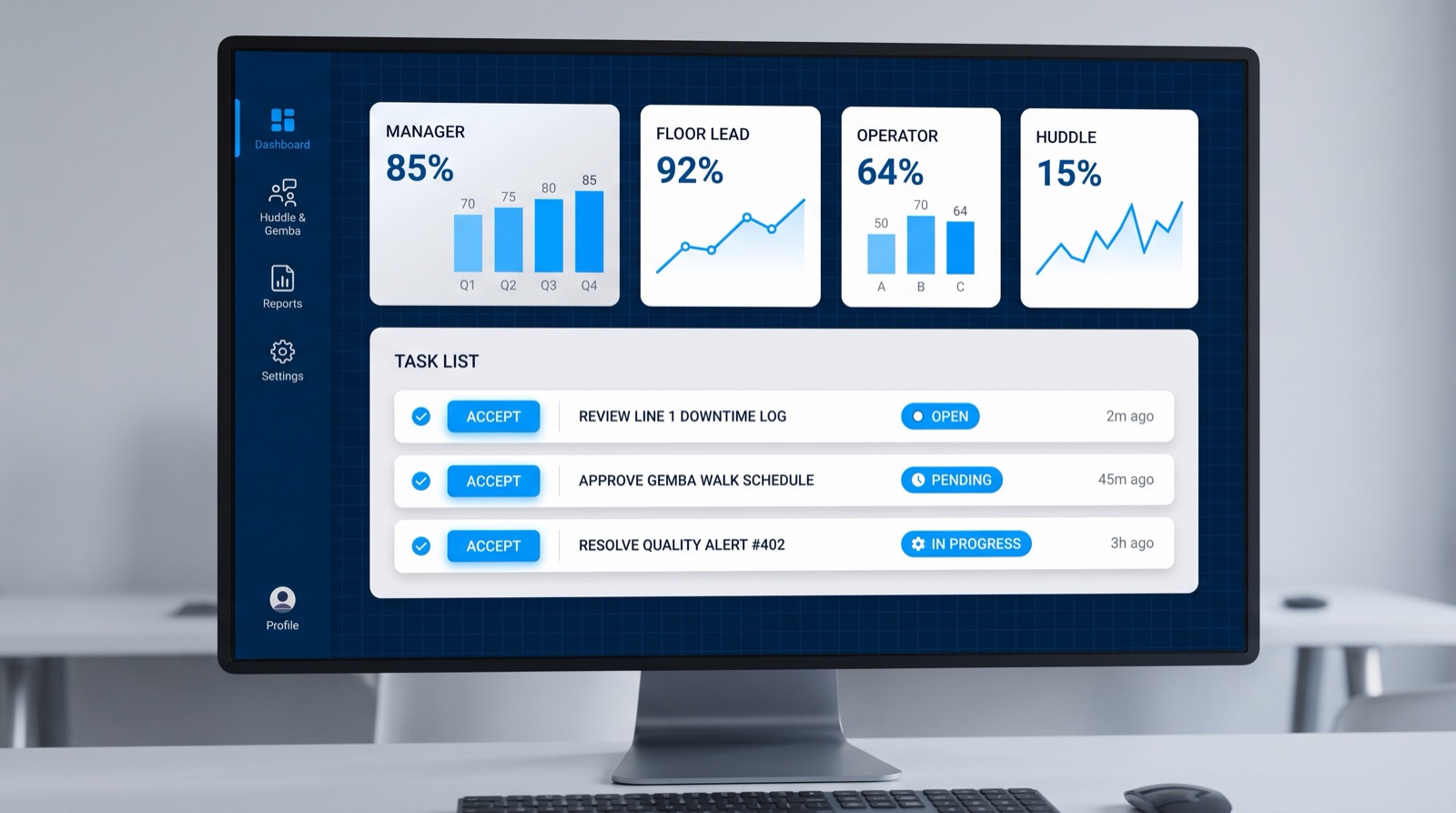
Daily Huddle & Gemba Report
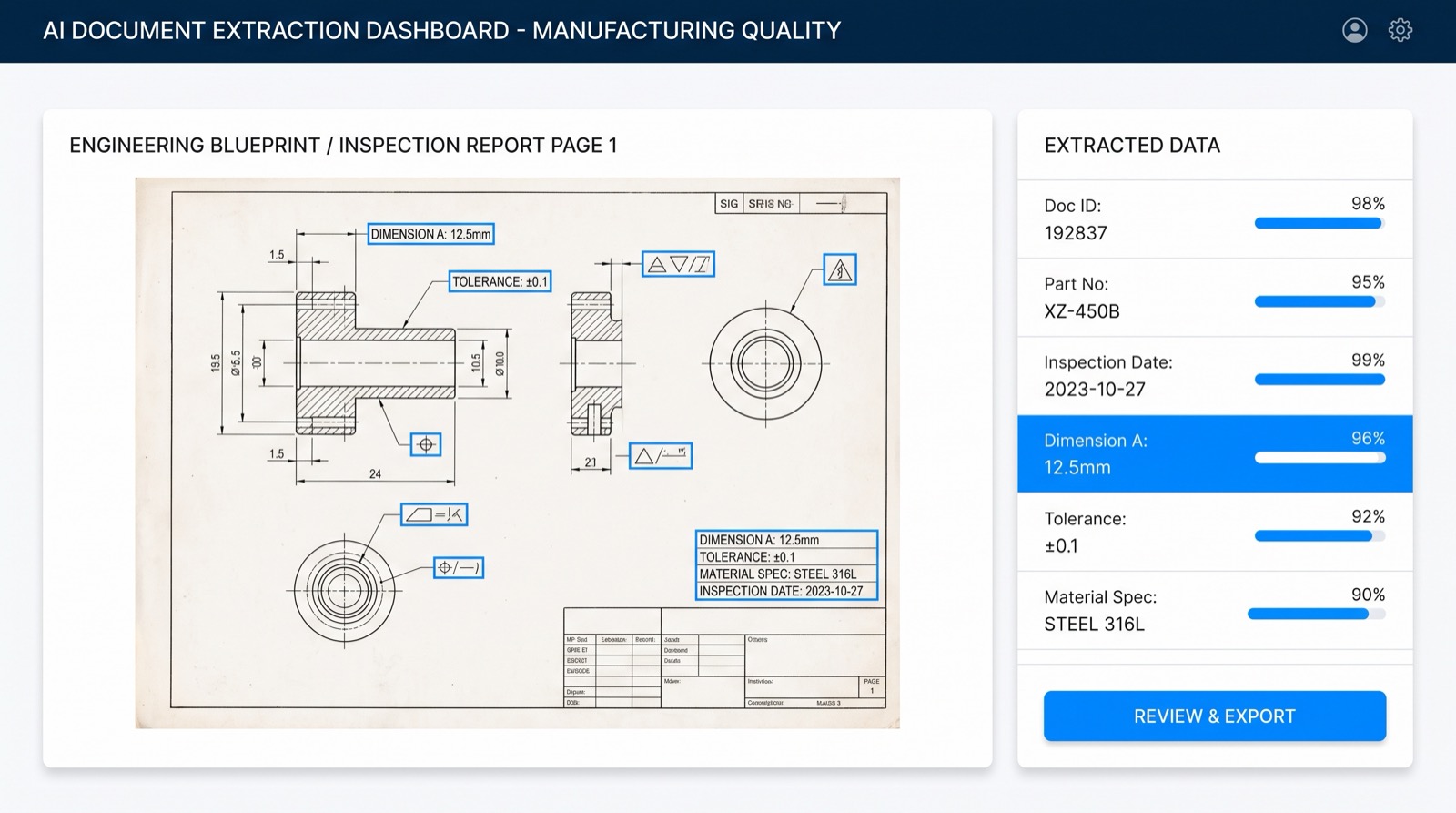
Regulated Document Extraction
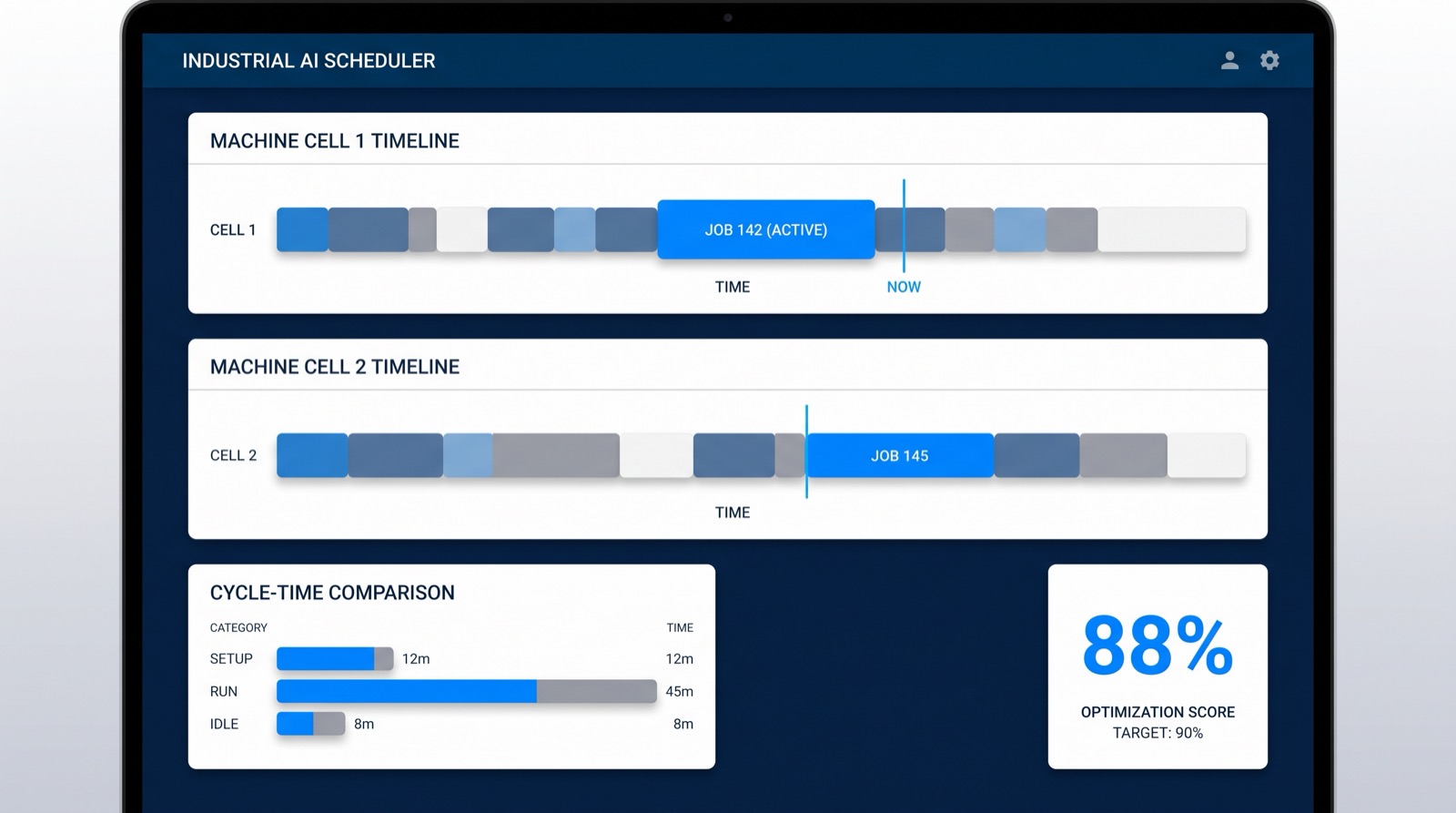
Cell-Balance & Scheduling
IT DOESN'T STOP AT A REPORT
The Agent Takes the Action
A report is one thing these agents produce. Most of what they do is take the next action inside the plant's own systems — a person approves anything that carries risk.
Draft the maintenance work order
When a cell trend crosses the line, the agent opens the work order in the CMMS, pre-filled, and routes it for one-click sign-off.
Send the coaching ask to the floor lead
The ranked ask lands in the right person's queue to accept or send back — nobody goes hunting for it.
Write the fix back to the knowledge base
An accepted fix is logged to the shared, searchable history — not left in one veteran's memory.
Commit the schedule change
Once approved, the cell-balance reassignment is written straight to the scheduler.
PRODUCTION TRACE
Daily Huddle & Gemba Report
Every step below runs against the plant's real data — the exact sequence, in order.
4
Shift reports generated
9
Coaching asks accepted
6
Document callouts flagged
3
Cross-shift notes carried forward
3 items need your judgment
Ingest
AutomatedLive shift data pulled from the robotic cell logs each rotation — no new sensors, no new data entry.
Fan out by role
AutomatedOne data pull becomes four reports — plant manager (strategic), floor lead (execution), per-operator (skill-aware coaching), and the daily huddle agenda — each grounded in the same numbers.
Ground every claim
AutomatedEvery recommendation cites the exact log entry or benchmark behind it, not a general opinion.
Floor lead review
Reviewer inputEach recommended ask is one-click accept or reject. Rejections become training signal for tomorrow's report.
Tomorrow's diff
AutomatedThe next huddle opens with a diff against today's accepted asks — did it work, what changed.
REAL OUTPUT · REGULATED DOCUMENT EXTRACTION
One Example, Fully Processed
When a job calls for a written artifact, this is what the system produces — everything it finds, structured for the action it triggers next.
Precision Flange Bracket
ANSI B drawing · 6061-T6 aluminum · Extracted in 4.2s · 3 OCR backends available, local model used
GD&T Callouts Extracted
| Callout | Value | Datum | Feature | Confidence |
|---|---|---|---|---|
| Positional | ⌖ 0.10mm | A-B-C | Primary mounting bore | 96% |
| Perpendicularity | ⊥ 0.05mm | A | Mounting face | 94% |
| Parallelism | ∥ 0.08mm | B | Flange face | 91% |
| Runout | ⟲ 0.06mm | A | Outer diameter | 68% |
| Surface finish | Ra 1.6 | — | Mating face | 98% |
Part Summary — for Quoting
Precision Flange Bracket, ANSI B, 6061-T6 aluminum. Four positional/geometric callouts plus one surface-finish spec. The primary mounting bore carries the tightest tolerance on the print — ±0.10mm positional to datum A-B-C — that's the quoting driver. Everything else on this part sits inside the shop's standard capability band.
Tough Areas — Floor's First-Article Briefing
WAVE 2 — IN BUILD
Cell-Balance & Scheduling — What's Next
Cell 4 (5-axis setup) and Cell 13 share overlapping part families and tool commonality. When both queue a job at once, one waits — and the wait isn't always assigned to the cheaper option.
The agent proposes a reassignment; a constraint solver checks the math. Nothing ships on an LLM's arithmetic — the solver's answer is the answer, the agent just explains it.
Worked example the solver evaluates today in testing
Job 1182 (Cell 4) and Job 1191 (Cell 13) both queue at 9:40 AM. Four reassignment options scored by projected cycle-time delta:
WHAT CHANGED
Time returned
~90% of manual writeup time
Floor leads got the time back for coaching and setup reduction, not for a longer report.
Operating complexity
A reconstructed-from-memory huddle became a reviewed, one-click-accept brief
Where this stands
First system live in 30 days
UP NEXT · TEAM VIEW